Thai red curry mussels in creamy coconut milk sauce with lime and cilantro
Thai Red Curry Mussels with Coconut Milk combines fresh mussels with a fragrant red curry sauce made from coconut milk, aromatics, lime, and Thai-inspired seasonings. The mussels cook directly in the sauce, allowing their natural juices to blend with the creamy coconut base while the curry paste provides warmth and depth.
This Thai coconut curry mussels recipe is designed around a simple stovetop technique: build the curry sauce first, then steam the cleaned mussels until their shells open. The result is a rich but balanced dish with creamy coconut, savory aromatics, gentle sweetness, acidity from lime, and adjustable heat from red curry paste.
Table of Contents
Table of Contents
Why You’ll Love This Recipe
The main advantage of these Thai curry mussels with coconut milk is the speed at which the flavors come together. Mussels require only a short cooking time, while coconut milk creates a smooth sauce that carries the curry paste and aromatics evenly.
The sauce also makes the dish especially versatile. It can be spooned over rice, used for dipping with crusty bread, or enjoyed directly from the bowl. Lime juice added toward the end keeps the coconut sauce from tasting heavy, while fresh cilantro provides a bright finish.
Another useful feature is that the spice level is easy to control. Use a smaller amount of red curry paste for a milder sauce or increase it for spicy Thai red curry mussels.
Ingredients You’ll Need
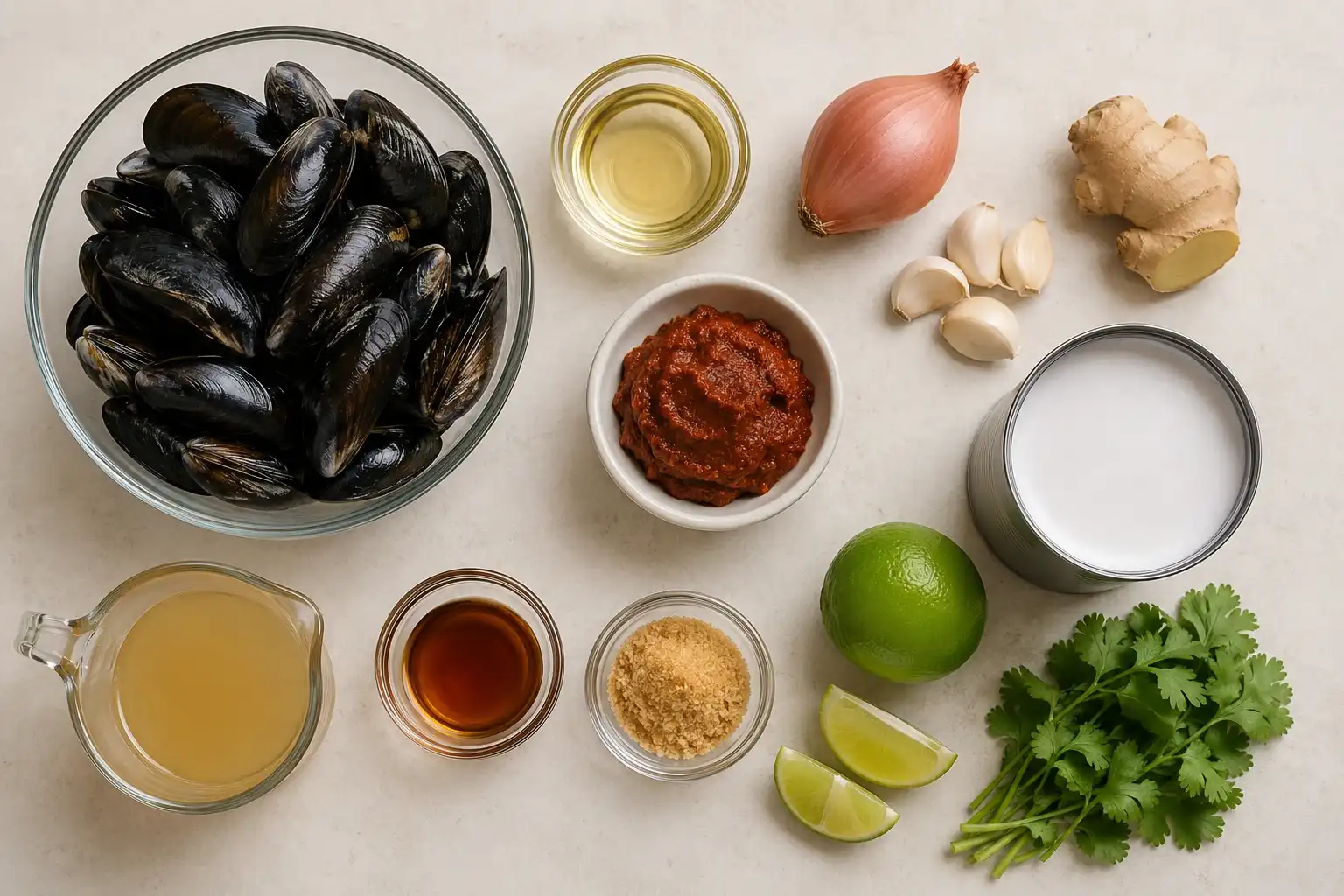
Ingredients for Thai red curry mussels with coconut milk including mussels, coconut milk, curry paste, lime, and aromatics
Fresh mussels are the most important ingredient. Choose mussels with clean, intact shells and a fresh sea-like smell. Before cooking, rinse and scrub them well and remove any visible beards. Discard cracked mussels and any raw mussels that remain open after a firm tap.
Coconut milk forms the creamy foundation of the sauce. Full-fat coconut milk generally gives the best texture because it creates a richer sauce without requiring flour or another thickener.
Thai red curry paste supplies most of the concentrated spice, color, and aromatic character. The heat level varies considerably between brands, so the amount can be adjusted according to the paste you use.
Garlic, fresh ginger, and shallot create the aromatic base. Fish sauce contributes salt and savory depth, while a small amount of brown sugar balances the heat and acidity. Lime juice is added near the end because its fresh acidity is more noticeable when it is not cooked for a long time.
Fresh cilantro and lime wedges are finishing ingredients rather than part of the main cooking process. They add freshness and contrast to the creamy sauce.
How to Make Thai Red Curry Mussels with Coconut Milk
The cooking process begins by preparing the mussels and building the curry base separately. Sauté the shallot, garlic, and ginger gently so they soften and become fragrant without browning heavily. Stir in the red curry paste and cook it briefly to release its aromatic oils.
Add the coconut milk, fish sauce, brown sugar, and water or stock, then bring the mixture to a gentle simmer. This creates the Thai coconut curry sauce before the mussels are added.
Once the sauce is simmering, add the cleaned mussels and cover the pan. The trapped steam cooks the mussels quickly. Shake the pan once or twice during cooking so the mussels cook evenly and are coated with the sauce.
The most important visual cue is the mussel shells opening. Once most of them have opened and the flesh is cooked through, remove the pan from the heat. Do not continue cooking longer than necessary because overcooked mussels can become tough.
Finish the sauce with fresh lime juice and cilantro. Taste before serving and adjust the balance of salt, acidity, sweetness, and heat if needed.
Print
Thai Red Curry Mussels with Coconut Milk
- Total Time: 25 minutes
- Yield: 4 servings 1x
Description
Fresh mussels steamed in a creamy Thai red curry sauce with coconut milk, garlic, ginger, lime, and aromatic seasonings.
Ingredients
2 pounds fresh mussels, scrubbed and debearded
1 tablespoon neutral oil
1 medium shallot, finely chopped
3 garlic cloves, minced
1 tablespoon fresh ginger, finely grated
2 tablespoons Thai red curry paste
1 (13.5-ounce) can full-fat unsweetened coconut milk
1/2 cup water or low-sodium seafood stock
1 tablespoon fish sauce
1 teaspoon light brown sugar
1 tablespoon fresh lime juice
1/4 cup chopped fresh cilantro
Lime wedges, for serving
Instructions
Step 1: Prepare the Mussels: Rinse and scrub the mussels under cold running water. Remove the beards and discard cracked mussels or any raw mussels that remain open after a firm tap.
Step 2: Cook the Aromatics: Heat the oil in a large deep skillet or Dutch oven over medium heat. Add the shallot, garlic, and ginger and cook for about 2 minutes, stirring, until fragrant and softened.
Step 3: Bloom the Curry Paste: Add the Thai red curry paste and cook for about 1 minute, stirring constantly, until fragrant.
Step 4: Build the Coconut Curry: Pour in the coconut milk and water or seafood stock. Add the fish sauce and brown sugar. Stir well and bring the sauce to a gentle simmer.
Step 5: Steam the Mussels: Add the cleaned mussels to the simmering sauce. Cover the pan and cook for 4 to 6 minutes, shaking the pan once or twice, until the mussel shells have opened and the meat is cooked through.
Step 6: Finish the Sauce: Remove the pan from the heat. Stir in the fresh lime juice and chopped cilantro. Taste and adjust the seasoning if necessary.
Step 7: Serve: Spoon the mussels and coconut curry sauce into bowls. Serve immediately with lime wedges and rice, noodles, or crusty bread.
Notes
Use fresh, properly cleaned mussels for the best flavor and texture. Curry paste varies in heat and saltiness, so adjust the amount to taste. Discard any mussels that remain closed after cooking. Serve immediately for the best texture. Refrigerate leftovers in a covered container and use within 1–2 days. Reheat gently without prolonged boiling.
- Prep Time: 15 minutes
- Cook Time: 10 minutes
- Category: Main Course
- Method: Stovetop
- Cuisine: Thai
Nutrition
- Serving Size: About 1/4 of the recipe, including sauce
- Calories: 420 kcal
- Sugar: 7 g
- Sodium: 1050 mg
- Fat: 27 g
- Saturated Fat: 18 g
- Unsaturated Fat: 7 g
- Trans Fat: 0 g
- Carbohydrates: 12 g
- Fiber: 2 g
- Protein: 29 g
- Cholesterol: 70 mg
Keywords: Thai Red Curry Mussels with Coconut Milk, Thai coconut curry mussels, Thai curry mussels with coconut milk, Thai red coconut curry mussels, mussels in Thai coconut curry sauce, Thai coconut curry mussels recipe, Thai curry coconut milk mussels, spicy Thai red curry mussels, creamy coconut curry mussels, Thai green curry mussels, Thai mussels coconut curry, coconut milk mussels recipe, easy Thai curry mussels, red Thai curry mussels recipe, coconut curry mussels recipe, mussels with coconut milk
Tips for the Best Thai Red Curry Mussels with Coconut Milk
Start with properly cleaned mussels. Remove beards and scrub away dirt before the mussels reach the pan. This prevents grit from getting into the finished sauce.
Do not boil the coconut sauce aggressively. A gentle simmer is enough. Excessive boiling can make the sauce reduce too quickly before the mussels have finished cooking.
Cook the curry paste briefly before adding the liquid. This helps release its aroma and gives the finished sauce a deeper curry character.
Add lime at the end. Fresh lime juice provides a cleaner, brighter acidity when added after cooking rather than simmered throughout the dish.
Watch the mussels rather than relying only on the clock. They cook quickly, and shell opening is a useful indication that they are ready. Discard any mussels that remain closed after cooking.
Taste the sauce before adding more salt. Curry paste and fish sauce can both contain significant amounts of sodium, so seasoning should be adjusted only after tasting.
Variations and Substitutions
For a milder version, reduce the red curry paste and increase the coconut milk slightly if needed to maintain the desired sauce consistency. For more heat, add additional curry paste gradually rather than adding a large amount at once.
A small amount of thinly sliced red chili can provide fresh heat, although it is not necessary for the core recipe.
If fish sauce is unavailable, soy sauce can provide savory seasoning, although the flavor will be different. For a seafood-forward variation, a small amount of seafood stock can replace some of the water.
Although the recipe is based on red curry paste, the same general cooking method can be adapted to Thai green curry mussels by using Thai green curry paste. Green curry paste typically produces a different aromatic profile and may have a different heat level.
For an even richer version, use full-fat coconut milk and allow the sauce to reduce very slightly before adding the mussels. Avoid reducing it too far because the mussels release additional liquid during steaming.
What to Serve With Thai Red Curry Mussels with Coconut Milk
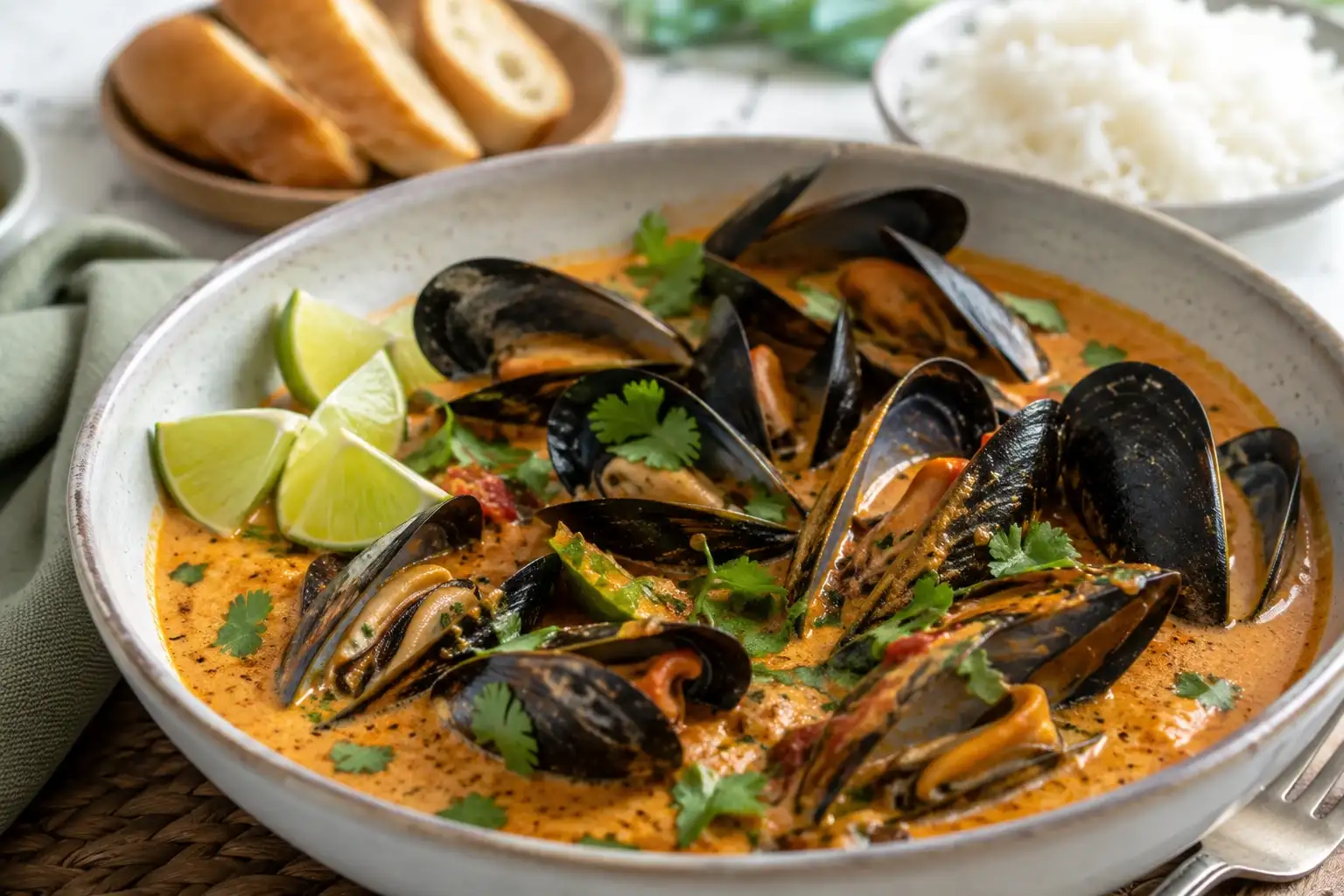
Thai coconut curry mussels served with creamy red curry sauce, lime, and cilantro
Steamed jasmine rice is one of the simplest pairings because it absorbs the coconut curry sauce without competing with the mussels. Rice noodles are another option when you want the dish to feel more like a complete noodle meal.
Crusty bread works particularly well if you want to use the sauce as a dip. The bread can soak up the coconut curry without requiring another side dish.
For a lighter meal, serve the mussels with a crisp cucumber salad or simply add lime wedges and fresh cilantro at the table. The fresh, acidic elements provide contrast to the creamy sauce.
Serve the mussels immediately after cooking. The sauce is at its best while warm, and the mussel meat can become firmer if it sits for too long.
Storage and Reheating
Cooked mussels are best eaten immediately, but leftovers can be refrigerated in a covered container once they have cooled. For best quality, use them within 1–2 days.
Reheat gently in a saucepan over low to medium heat until hot. Avoid prolonged boiling because the mussel meat can become rubbery. If the sauce has thickened in the refrigerator, a small splash of coconut milk or water can loosen it.
Because mussels are delicate seafood, do not repeatedly cool and reheat the same portion. Only reheat the amount you plan to eat.
Frequently Asked Questions
Can I make Thai coconut curry mussels with canned coconut milk?
Yes. Full-fat canned coconut milk is preferable because it gives the sauce a richer body. Shake or stir the can well before measuring because coconut cream and liquid can separate during storage.
How spicy are Thai red curry mussels?
The heat depends mainly on the red curry paste. Different brands vary considerably, so start with a moderate amount and adjust after tasting the sauce.
Can I use frozen mussels?
Frozen mussels can work, but the cooking approach depends on whether they are raw, cooked, shelled, or already steamed. Fresh mussels in their shells are the best choice for this recipe because they release flavorful juices while steaming.
What makes mussels in Thai coconut curry sauce taste balanced?
The sauce needs contrast. Coconut milk provides richness, curry paste supplies spice and aromatics, fish sauce adds savory depth, sugar rounds out the heat, and lime juice contributes acidity. None of these elements should dominate.
Can I use green curry paste instead of red curry paste?
Yes. Thai green curry mussels can be prepared using the same basic technique. The resulting dish will have a different color, aroma, and flavor profile, so it should be considered a variation rather than the same recipe.
What is the best coconut milk for mussels?
Full-fat unsweetened coconut milk is generally the best option. Avoid sweetened coconut cream intended for desserts, as its sweetness and consistency are not appropriate for a savory curry sauce.
How do I know when mussels are cooked?
The shells generally open as the mussels steam. Cook until they have opened and the meat is cooked through. Mussels that remain closed after cooking should be discarded.
Can I make this coconut curry mussels recipe less spicy?
Yes. Use less red curry paste and taste the sauce before adding more. Increasing the coconut milk slightly can also soften the overall intensity, although it will change the sauce’s concentration.
Final Thoughts
Thai Red Curry Mussels with Coconut Milk is built around a straightforward combination of fresh mussels, coconut milk, red curry paste, aromatics, and lime. The short cooking time makes it suitable for a quick seafood dinner, while the coconut curry sauce gives the dish enough depth to serve with rice, noodles, or crusty bread.
For the best result, focus on fresh mussels, gentle cooking, balanced seasoning, and adding the lime and herbs at the end. Those details keep the sauce creamy and aromatic while allowing the mussels to remain tender.